Composites Built to Scale: How Toray PMC's Global Footprint Drives Scalable Manufacturing
When people hear the term scalability, they often think of manufacturing capacity. However, true scalability extends far beyond simply producing more parts. It requires advanced manufacturing technologies, global collaboration, and the ability to consistently deliver high-performance thermoplastic composite solutions at scale. From production efficiency to high-rate manufacturing, scalability is about creating systems that can meet growing demand without compromising quality, innovation, or reliability.
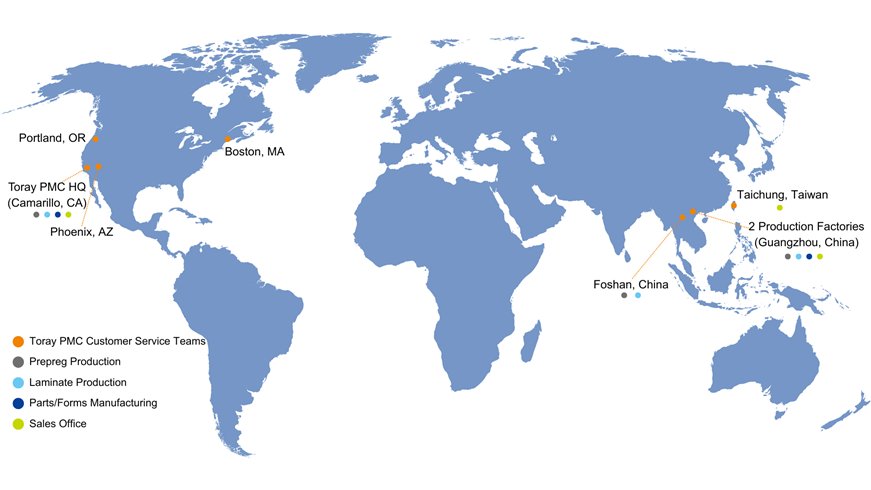
At Toray Performance Materials Corporation (PMC), scaling innovation means leveraging the strength of a global network to develop and manufacture advanced thermoplastic composites for customers around the world. Today, our thermoplastic composite parts can be found in more than 100 million pairs of shoes worldwide and support more than 5 million patients in need of podiatric correction and improved mobility. These applications demonstrate the scale at which Toray PMC materials are used every day, and the manufacturing capabilities required to deliver consistent, high-performance solutions to global markets. With manufacturing operations across East Asia and headquarters in Camarillo, California, our teams combine decades of engineering expertise, advanced manufacturing capabilities, and technical knowledge to help customers move from product development to full-scale production. This integrated approach helps customers bring innovative products to market while maintaining the quality and reliability they depend on.
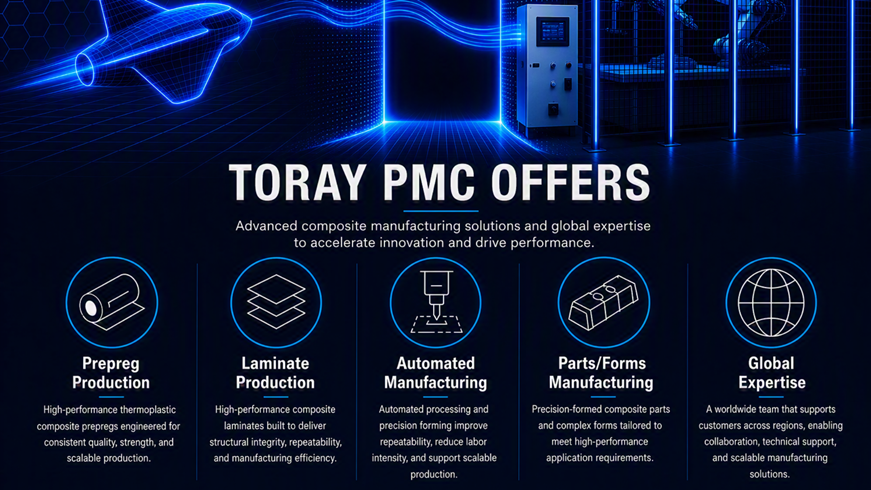
High-Rate Manufacturing Enables Scalable Production
As demand for thermoplastic composites continues to grow across industries, manufacturers must be able to scale production while maintaining the performance, consistency, and reliability these advanced materials are known for.
The need for scalable manufacturing is being driven by continued growth in the thermoplastic composites market. According to Mordor Intelligence, the global demand for thermoplastic composites is expected to increase from 4.92 million tons in 2025 to 6.64 million tons by 2031, representing a compound annual growth rate (CAGR) of 5.14% from 2026 to 2031. As adoption expands across industries such as automotive, aerospace, consumer electronics, and industrial applications, manufacturers must be prepared to increase output while maintaining consistent quality and performance.
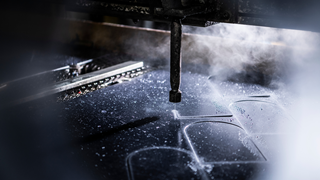
Advanced automation technologies improve repeatability, enhance production efficiency, streamline workflows, and reduce variation throughout the manufacturing process. These capabilities help manufacturers increase output while maintaining the consistent quality and performance that customers expect.
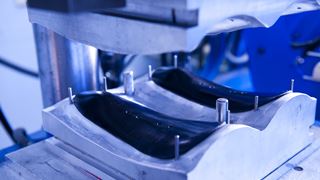
Industry advancements continue to improve manufacturing efficiency. For example, automated thermoforming line systems have reduced cycle times for certain structural thermoplastic composite applications to less than 60 seconds, helping make high-volume production more feasible and cost effective. Additionally, thermoplastic composites continue to dominate many high-volume manufacturing programs because they are compatible with established injection molding and compression molding processes, enabling efficient production at scale.
However, automation is only part of the equation. The expertise of the people behind these technologies remains essential. Skilled engineers and production teams are responsible for monitoring processes, ensuring quality standards are met, and driving continuous improvement, helping manufacturers meet the demands of industries around the world.
Thermoplastic Composites Support Industries Worldwide
The benefits of thermoplastic composites and production scalability extend across numerous markets, including:
- Athletic Footwear
- Sports & Recreation
- Medical
- Consumer Electronics
- Automotive
- Industrial
Each industry presents unique challenges, but all require dependable materials backed by manufacturing capabilities designed to support long-term growth and innovation.
Whether improving durability, reducing weight, increasing efficiency, or enabling new product designs, thermoplastic composites continue to help manufacturers meet evolving performance requirements. In many applications, thermoplastic composites provide significant weight savings compared with traditional metal materials while maintaining the strength and durability required for demanding applications.
Unlike many traditional materials and thermoset composites, thermoplastic composites can be reheated, reprocessed, and reused, helping manufacturers reduce waste while supporting more sustainable production practices. This combination of performance, scalability, and sustainability continues to drive adoption across industries worldwide. Their recyclability and ability to support circular manufacturing initiatives are increasingly important as manufacturers pursue sustainability goals while maintaining production efficiency.
Conclusion
For Toray PMC, Composites Built to Scale represents more than manufacturing volume. It reflects the ability to combine advanced technologies, manufacturing expertise, and innovation to improve production efficiency and support high-rate manufacturing across various industries.
As demand for thermoplastic composites continues to grow, scalability will remain essential to delivering the quality, consistency, and performance customers expect. Through continued investment in manufacturing capabilities and technical innovation, Toray PMC is helping customers bring new solutions to market while preparing for future opportunities.
As we celebrate both National Composites Week and Toray PMC's 40th anniversary, we're proud to reflect on four decades of growth, customer partnerships, and manufacturing excellence. Looking ahead, we remain committed to advancing thermoplastic composites and scalable manufacturing to help shape the future.
%20.png?mw=870&mh=490)
Sources
- Mordor Intelligence, Thermoplastic Composites Market Size and Share Analysis (2026-2031). Market volume forecast: 4.92 million tons (2025) to 6.64 million tons (2031), CAGR 5.14%.
- NASA Technical Reports Server, Advances in Thermoplastic Composites Over Three Decades – A Literature Review. Findings on automation, recyclability, and manufacturing efficiency.
Related news