When Disaster Strikes, Materials Matter: The Shift Toward Resilient Infrastructure with Composites
Challenges in Today’s Infrastructure
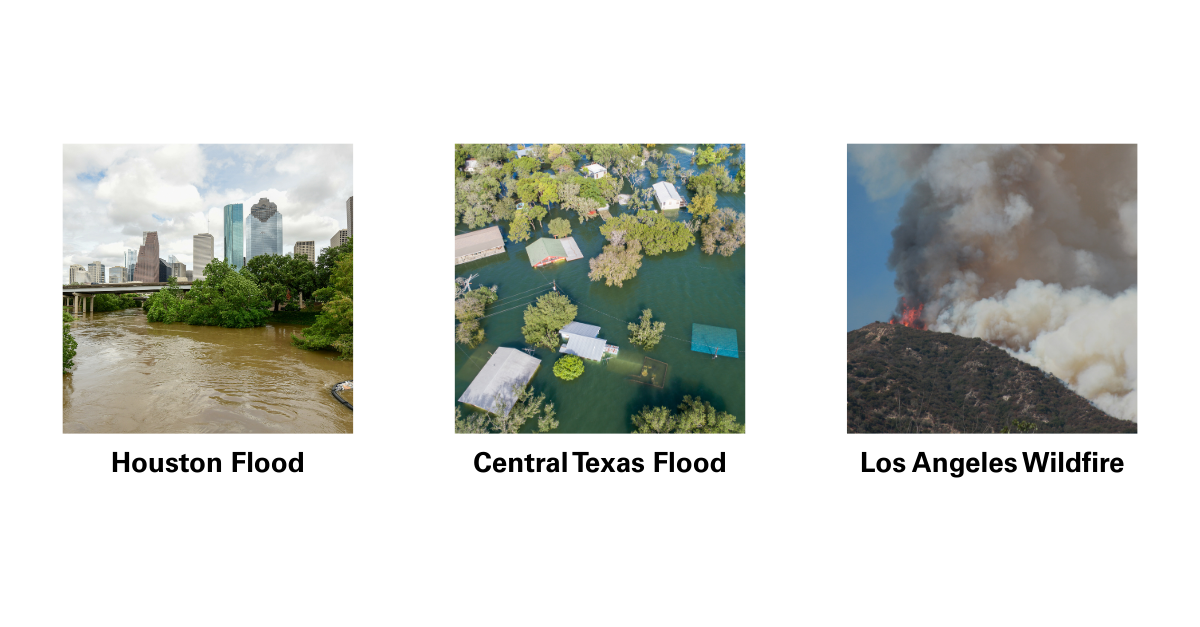
For many decades, communities across the United States have faced a growing number of natural disasters—from wildfires in Los Angeles to severe flooding in Central Texas and a powerful tornado outbreak that swept through the southern states. These events have not only tested emergency response systems but also revealed how vulnerable much of our infrastructure still is. Many of the materials and designs we rely on today trace back to centuries-old practices, and even buildings constructed in the 20th century often use traditional materials like wood, steel, and concrete, materials that are increasingly struggling to keep up with the demands of a changing climate.
Composite Materials: A Stronger and Smarter Solution
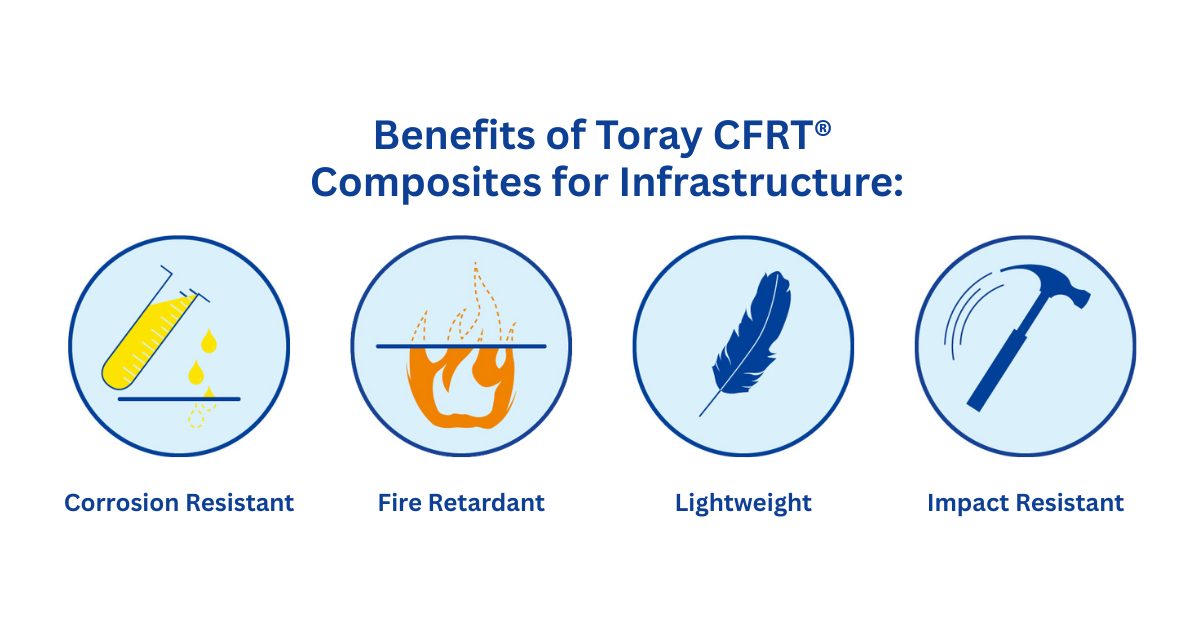
In response to these challenges, cities and utility providers have begun adopting composite materials as a more resilient and sustainable alternative. These engineered materials combine multiple components to deliver superior strength, durability, and resistance to environmental stress. Among them, thermoplastic composites are gaining traction for their lightweight structure, corrosion resistance, and recyclability. Many formulations are enhanced with flame-retardant additives or coatings, making them suitable for use in wildfire-prone regions and critical utility systems. For instance, in wildfire-prone in the west coast states, utility companies have begun replacing traditional wood utility poles with composite pols that incorporate flame-retardant qualities. These poles are designed and utilized to withstand high temperatures and resist ignition, preventing the spread of fire through utility corridors and improving post-disaster recovery timelines. Their resistance to moisture and corrosion also makes them ideal for areas with high precipitation, helping prevent degradation of utility poles, underground systems, and even structural components like bridge decks. In flood-prone and coastal regions, thermoplastic composites are being used to replace traditional concrete and steel in bridge decks, reducing stress on aging support structures and enabling faster installation and repair, a crucial advantage during disaster recovery efforts. These innovations reflect a broader shift toward infrastructure solutions that prioritize long-term resilience, adaptability, and sustainability in the face of increasingly extreme environmental conditions.
Toray PMC’s Innovations for a Sustainable Future
At Toray PMC, we strive to help society develop composite materials that meet the evolving demands of modern infrastructure, especially as natural disasters continue to challenge the reliability of traditional systems. We specialize in continuous fiber reinforced thermoplastic composites, which are being used across a wide range of industries due to their strength, durability, and adaptability. These materials are corrosion resistant, fire retardant, and lightweight, making them ideal for applications in regions prone to flooding, wildfires, and severe storms. Whether it’s utility poles or structural components, our composites are designed to perform reliably in diverse environments and help communities build safer, more resilient infrastructure. As cities and agencies begin to implement priority infrastructure plans, composite materials like ours are playing a crucial role in ensuring long term performance, sustainability, and disaster resilience.
Related news